17.6.21
29.11.20
Here Passes the Tropic of Capricorn
What has living along the line of the Tropic of Capricorn done to me, or changed in me thus far? Hard to say as of now. Due to the ensuing pandemic it has been more difficult to get "out" and really see and feel the geography. One thing is for sure, I now know what it's like to live where thunderstorms converge and bring fury as fast as emotions can rise within the body and bring rage. The vibe here on the line that separates the tropics, from the near tropics, is fine, and the lines one need to walk here in the biggest city in South America can also be constantly shifting. Goals and ideas, are always in flux here, more so in the calm Mediterranean climes I'm more accustomed to. I suppose it will be some time later when I will understand how living along this line of latitude has changed me, if at all, and it may be a change that I will never fully understand.
As of now I am very disappointed that the pandemic has made it so hard to travel to places such as the Pantanal and Cerrrado regions, where the biodiversity these places harbor would impress any naturalist around the world, and worse so, the fires that have ravaged the Pantanal leave me wondering if I will ever be able to see it as I had imagined. Fire seems to follow me, or at least to follow my dreams and my places of interest, and even my places of deep intimacy. First the Santa Monica Mountains, and now the Pantanal, places that I wanted to get to know, or have known deeply, are now just coming back from the ashes. While the government here and at home do their best to downplay the threats of climate change and disregard the environmental destruction taking place under the auspices of "Growth" I feel I have not done enough to sound the alarm or right the wrongs. I hope to one day soon enter the regions of Brazil's natural wonders and at least, see them for myself. I'm not sure what I can do to try and save them, or even how us Sapiens will be able to do it, but for now I have the Mata Atlantica here at my doorstep and it has breathed life into me, has shown us the neon colors of the tropics, the allure of the leafy green lands under the sun and cloud, the perfect beaches, the struggling communities, all of it juxtaposed together here so beautifully, one has to see it to believe it.
15.10.19
Jardim Botânico São Paulo Brasil
24.7.19
Holga 35mm in Rio
19.5.19
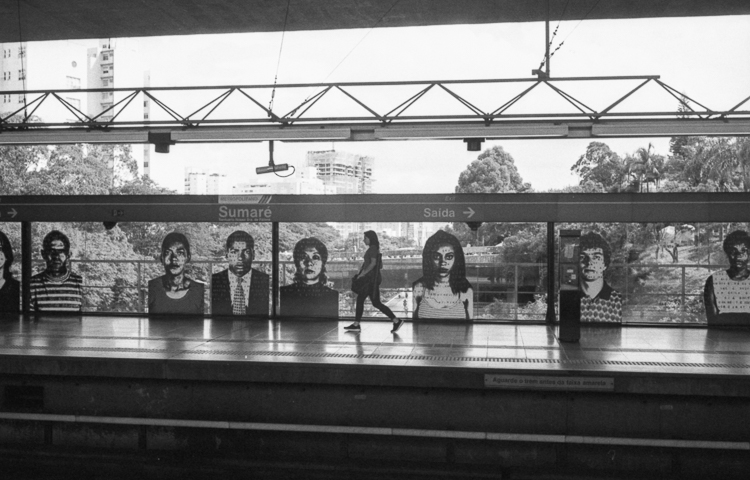
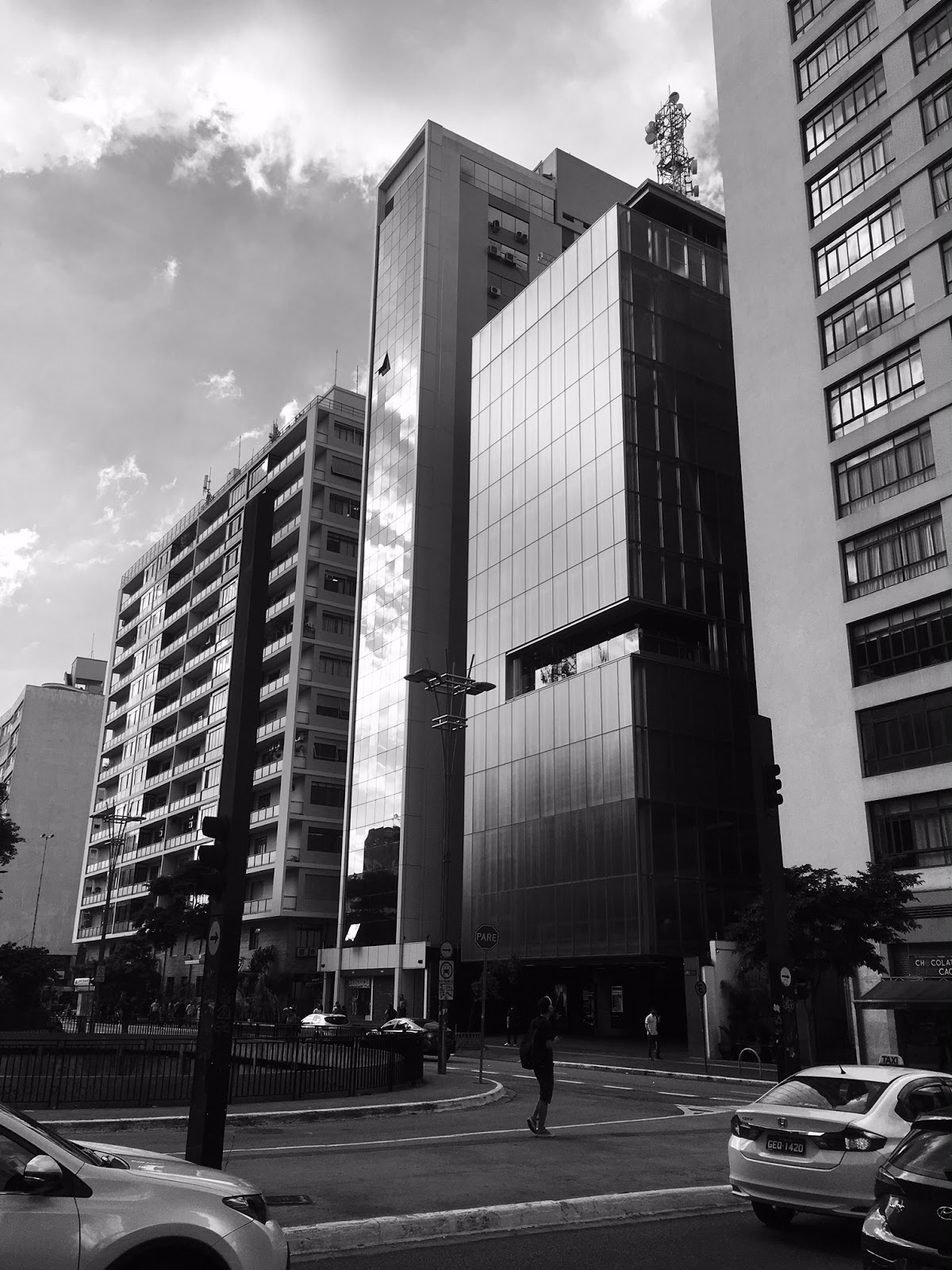
First Roll São Paulo
My first roll of black and white film shot here in São Paulo Brazil. The city that keeps inspiring me to get back into the art and photography groove. Here's to many more rolls of film to come...
26.3.19
A LUTA YANOMAMI by CLAUDIA ANDUJAR at the IMS PAULISTA
How fortunate I am to be living in a city with an institution that provides a free museum and photographic library for free, free! The IMS Paulista is that place, and I have been visiting it frequently now that I am based in São Paulo Brazil. Located on the famous Paulista stretch in the always something happening part of the city is where this place can be found. And even more fortuitous has been that the current exposition up now is a truly fascinating one full of amazing black and white silver prints along side some classic infrared color images of the Amazon.
The show, A Luta Yanomami (The Yanomami Struggle) by photographer Clauida Andujar, is displayed on two floors showcasing the artists work in the 70's and 80's when she was working on projects documenting the tribe for magazines working with health advocates and missionaries to gain access. The images are some of the only ones I have seen from that time period and today that seem to be taken with the tribe and not of them. Claudia talks about her work throughout the show on panels besides the images, about gaining trust slowly, and being invited to witness hunts and ceremonial dances, and one of the more interesting stories is about the time when she contacted Malaria and had to spend a year back in her São Paulo apartment. However, she took the time to learn more about the Yanomami culture and experiment with low light situations where she could test out exposure and developing techniques before returning to work with the tribe many more times.
Her work is being shown at a time when indigenous peoples all around the world are fighting to preserve their lands and keep their traditions and languages alive. Even here in Brazil with the well known indigenous rights government agency FUNAI set up to protect the tribes, there is new political and populist agricultural interests cutting away at the power of FUNAI and its ability to protect the tribes. The biggest threat to their sovereignty is the approach of armed 'wildcat' loggers looking to lop off the lands inside the reserves to sell to farmers. In this Reuters article you see some powerful images and can read a recent report about a recent standoff inside of a tribal reserve that had armed warriors with their poison tipped arrows pointed at armed intruders. The intruders left, but have vowed to return, and under the ascent of President Bolsanaro and his remarks, rural peoples have become emboldened to strike deeper into the reserves seeking to exploit the natural resources there.
The fight to maintain indigenous lands and the people who have cared for them in a symbiotic way for thousands of years is ongoing, but necessary. As I once heard my favorite film maker Werner Herzog remark, that so many people speak of the loss of whales and species, but what about the languages, and the cultures that everyday we are loosing?
5.2.19
Picinguaba
A trip we took up to tranquil and somewhat back in time Picinguaba, near the famous surf town of Ubatuba in the north coast of the state of São Paulo. To celebrate our first anniversary together as a married couple we wanted to find a place like this; a bit off the beaten track, tranquil, and on the beach.
I took my trusty Nikonos III with us, and some old rolls of film. Just having two rolls of film to capture everything makes you slow down and really focus on what you want to capture and which moments you want to remember.
At Picinguaba the Atlantic rainforest, or Mata Atlantica, comes right down to the beach and that part of the coast is one of the largest pieces of protected forest of this type. All of it part of the vast natural park Serra do Mar, making Picinguaba and the surrounding area a biodiversity hotspot. Every morning we watched the many colorful birds from our balcony at the Pousada Picinguaba. The Pousada was the perfect place to slow down and experience the essence of the place. A large colonial style home converted into a boutique hotel it is surrounded by lush tropical vegetation and trees and situated atop a steep hill holding a commanding view of the bay below. Furthermore, there are many great beaches nearby and the colonial town of Paraty just a short drive up the coast into Rio de Janiero state. We really enjoyed the peaceful vibe and we hope to make it up there again at least a few more times to enjoy the beaches and explore the forest a bit further.
20.9.18
Closing up Life Along the Humboldt Current, and Crossing the Andes on to the Next Chapter
As it is now official, I want to let the world wide web and all of the tribe members know, that starting in October, we are making the leap over the Andes to Brazil. We are excited for this new opportunity, but are also saddened to leave our perch here, overlooking the Pacific. There's much to contemplate, and now more to discover. I never got the chance to really explore this coast where I hoped I could contribute some support in the growing effort to preserve this unique coastal ecosystem that harbors Peruvian Booby colonies and endemic plants.
That being said, there will be plenty of time to discover that coast and more here in Chile in the future, but for now our energies are starting to turn towards the Tropic of Capricorn and that massive country along the Atlantic. A landscape and country that holds the origins of so many wild and exotic stories of discovery and natural and cultural history I'm still wondering where I should start. But, like any place, I'll probably start with the streets, the Metro, the people, the language, and go out from there.
Another blog and series of projects may be in the works, so please stay tuned.